
The Great Energy Bill Scam - Why they lie to you!
- Daniel Dimmock
- Jun 29
- 4 min read

Updated: Jul 5
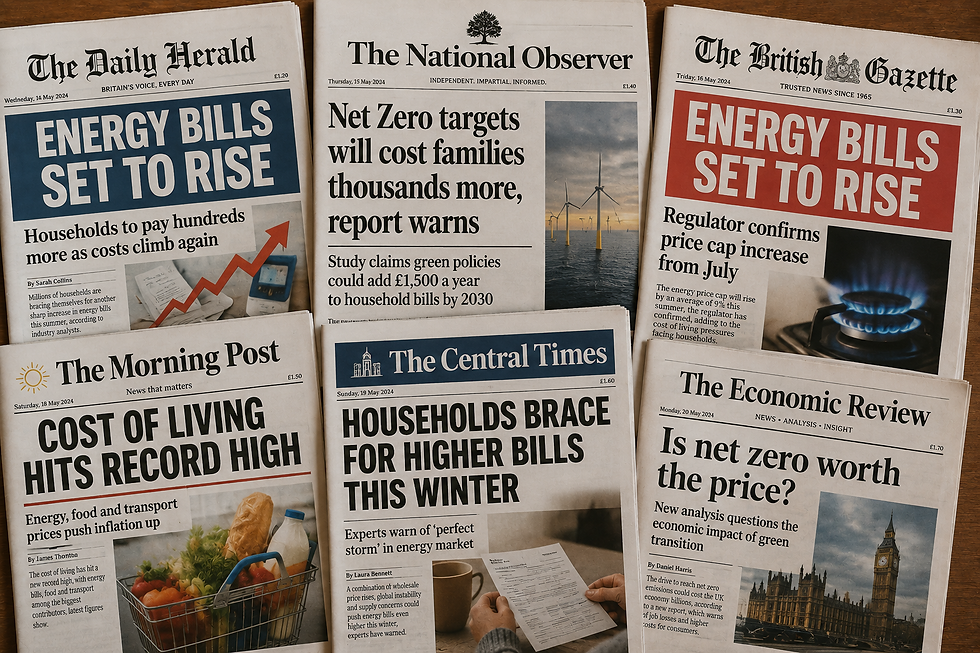
We've all seen the headlines that say energy bills are always increasing. Prices keep going up. Politicians and newspapers point the finger at various targets, Net Zero, woke windmills, fossil fuel prices, or whichever topic happens to be in the spotlight that week.
Here at DIY Home Energy UK, we have a different thesis that most people haven't caught onto. We think the way energy bills are reported in the UK is simply no longer fit for purpose, and is being done because it drives anger and clicks, a media environment where outrage is rewarded over the boring truth.
Let's break it down; Headline energy costs are almost always reported as the average household annual bill. If you think about it, that's a really weird way to report energy costs. We don't say petrol prices have risen to an average of £2,000 a year, because every person's experience with driving and fuel costs is completely different. Some drive 5,000 miles a year, others 30,000. Cars have different fuel economy, people drive differently, and fuel is bought at different prices. So why do we treat household energy as though everyone uses it in exactly the same way?
Time shifting - Headlines are stuck in the past!
Firstly, there is a massive problem in the way energy bills are reported, as the energy price cap is used as the metric from which average use is multipled by the price cap. We here at DIY Energy UK can currently get electricity at ~13p/Kwh, much lower than the price cap during midnight-6am, yet this won't be reflected in headline calculations. And there is millions of others also are on dual tariffs or even wholesale exposed tariffs like Octopus Agile.
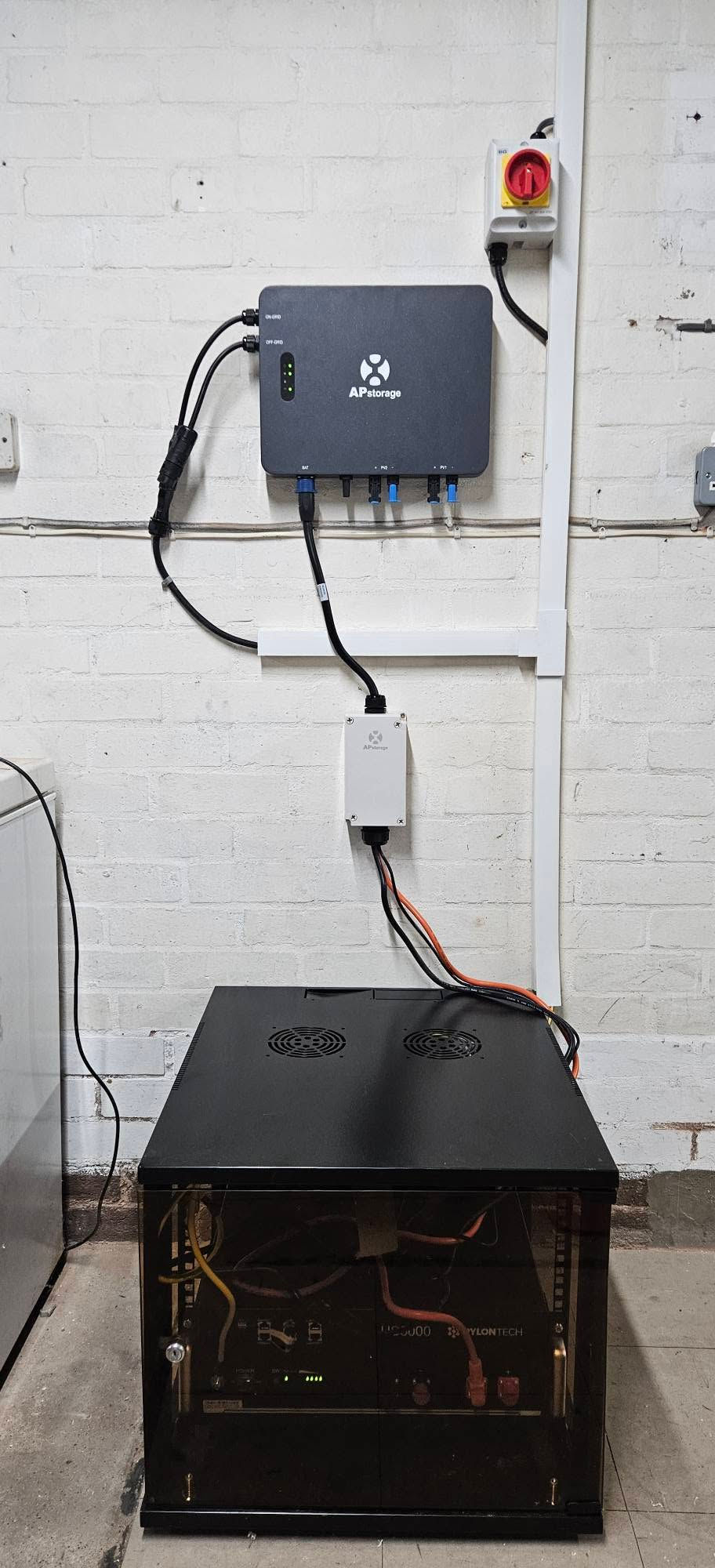
This means savvy users can now shift when they use appliances to take advantage of cheaper periods, and those with home batteries can go one step further by storing cheap electricity overnight and using it later during expensive periods, or exporting it, a concept known as energy arbitrage.
These time-of-use tarriffs, driven by renewables on our grid, are already saving households hundred or thousands of pounds each year, yet headlines still only tell us the average pence per kilowatt hour multiplied by the average household's annual electricity use. This outdated reporting method is missing out all the savings being made by those who take ownership of their energy use and take advantage of what is on offer to them with time-of-use tarriffs.
Where's my money? The missing export benefits
Another problem with headline energy bill costs is that they do not factor in the growing number of people who are generating or storing electricity and then selling it back to the grid.
We could easily have a household that consumes £2,000 worth of electricity over the year, but earns £300 exporting surplus solar energy. The headline still reports a £2,000 annual bill, despite the household's true net energy cost being £1,700.
There is also the case where households are reducing their electricity imports altogether through solar generation and battery storage. Again, this rarely makes the headlines because only gross consumption is discussed, rather than what people actually end up paying.
Are EVs really costing us?
Even worse, there are a number of changes happening to transport and home heating that are increasing electricity consumption. Electric cars and heat pumps naturally increase how much electricity a household uses.
So we have a system where rising electricity consumption is reported as a bad thing, when in reality many households are saving far more money by no longer buying petrol, diesel or gas.
An EV might add thousands of kilowatt hours to a home's electricity use, but if it replaces hundreds or even thousands of pounds of petrol each year, has the household really become worse off?
Yet the negative headline persists. People rage in the comments about Net Zero costing them more, when the reality is often that households have far more control over their energy than ever before. They are becoming less dependent on petrol stations, less exposed to wholesale gas prices, and increasingly able to generate, store and manage their own electricity.
What is really happening?
What is really happening is that there is a growing divide between how much electricity people use, what type of energy they use, what time they use it, and ultimately what they actually pay.
The average household bill is becoming less and less representative of real households.
Some people still pay close to the price cap. Others are charging batteries overnight, exporting solar during peak periods, charging electric cars cheaply, or using smart tariffs to dramatically reduce their costs.
Whilst the average might look similar on paper, households now have a growing range of options as electrification and renewable technologies continue to fall in price whilst improving in performance.
Better yet, many of these technologies are now accessible to DIY homeowners. With a little bit of know how, some careful planning, and in many cases nothing more than a standard plug socket, you can start generating, storing and managing your own electricity, making significant savings whilst taking back control of your energy bills.
Comments